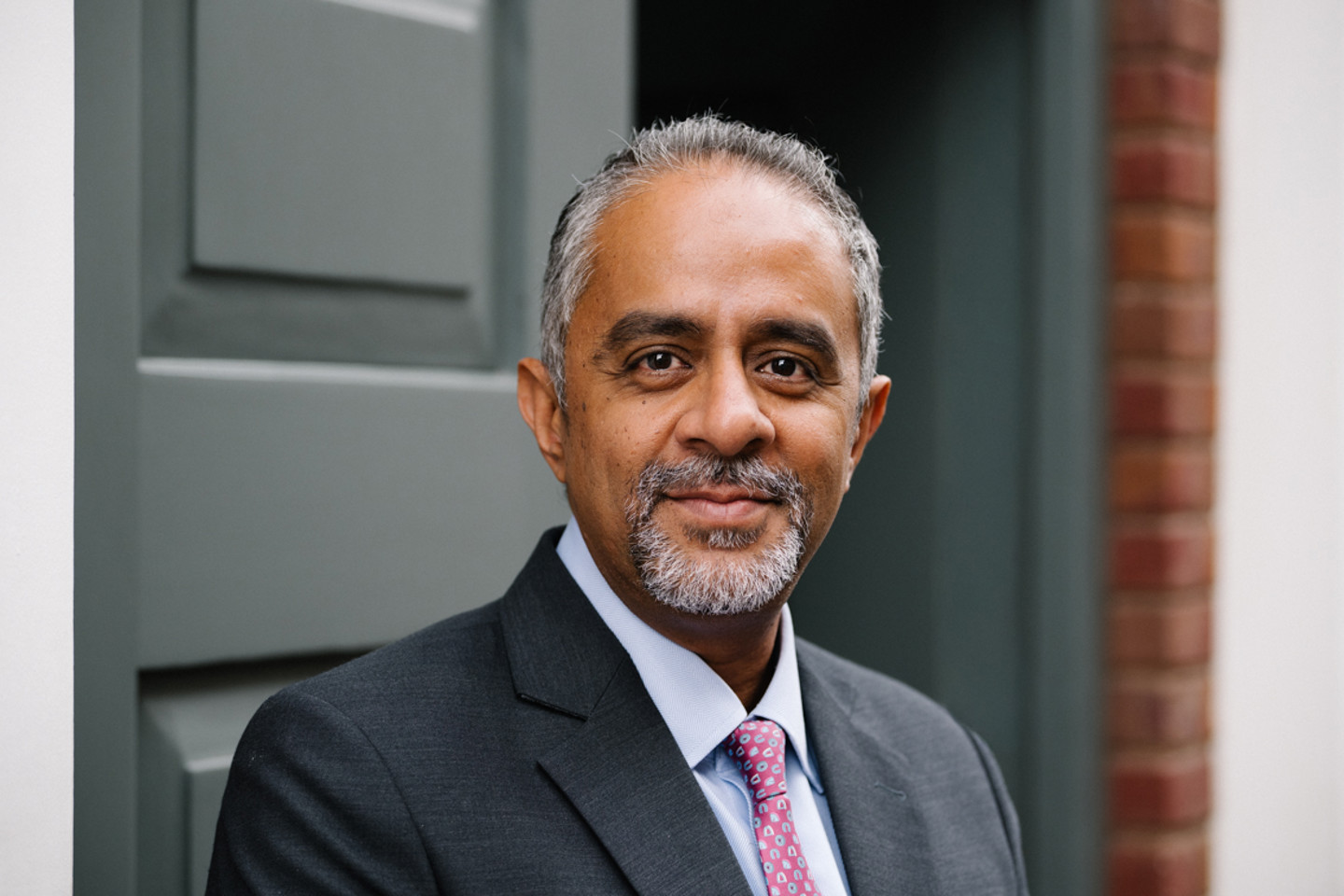
A family office should begin with purpose and governance, not a label or a choice of jurisdiction. For Faizal Bhana, the central questions are what the family wants to achieve, who will make decisions and how wealth will be stewarded across generations. A dedicated office is not necessary for every family: the operating model, costs and use of external professionals should reflect the services actually required.
Speaking on the second panel at the Hubbis Wealth Planning & Structuring Forum – Dubai 2026, held on 7 October, Faizal Bhana, Managing Director and Head of Middle East, Africa and India at Bedell Cristin, explored the distinction between running a family office and structuring ownership. The more useful question is not simply where to establish an office, but what it should do, whose interests it should serve and how its decisions will stand up to changing family circumstances.
Key Takeaways
- A family office is an operating model, not simply an entity or licence. Its governance, staffing and costs should follow the family’s objectives; a dedicated office is not necessary for every family.
- Family residence, office operations and asset ownership are distinct decisions. ADGM and DIFC can compliment structures in Jersey, Guernsey, Cayman and BVI, with each component serving a defined purpose.
- Founders and successive generations can have different priorities, requiring clear communication and defined decision-making authority.
- Before a business sale, IPO or partial exit, families need agreed decision-making, investment policies, reporting and succession arrangements, not just a plan to invest the proceeds.
- The cost of professional planning needs to be considered alongside the potential expense of a later dispute.
- AI-generated documents still require professional assessment and do not automatically reduce the work involved in giving advice.
Start with the Need and the Cost
Bhana acknowledged that having a family office can carry status, particularly in the region. He nevertheless urged families to consider the operating costs and whether the arrangement would meet their objectives.
“A family office is not a solution for every family,” he said.
A family might need help with investments, governance, structuring or administration without needing to employ a dedicated team for all those functions. An office within the existing family business or support from external professionals could offer alternatives. The distinction is functional: an investment platform focuses on managing assets, while a family office may also coordinate succession, reporting, family education, philanthropy and administration. Bhana also distinguished the office itself from the structures through which the family owns its assets.
Residence and Ownership Are Different Decisions
For families moving from operating businesses towards investment-led wealth, Bhana saw the UAE as an attractive place to live and access support. Homes, education and lifestyle can make Dubai a natural choice for the family. But residence, the location of the family office and the legal ownership of assets are separate questions. ADGM and DIFC can provide an operational and governance base, alongside ownership, investment and succession arrangements elsewhere internationally in jurisdictions like Jersey, Cayman, Guernsey or the BVI..
International families already have investments and family members spread across countries. Bhana described arrangements using several jurisdictions for different purposes, with advisers working across those locations. The assessment needs to account for the legal framework, available expertise and confidence that the jurisdiction can support future generations.
“We have multiple structures where different jurisdictions are used for different purposes,” he said.
The choice is therefore not simply the GCC versus offshore. A family may need a place from which to coordinate its affairs, arrangements for holding investments and a framework for succession. Those functions need not sit in the same jurisdiction. The test is whether the arrangements work together: whether authority is clear, reporting is coherent and the legal, tax and regulatory requirements affecting family members and assets have been considered. Complexity needs a purpose; adding entities or jurisdictions is not, by itself, better planning.
Different Generations Need a Shared Process
Bhana described how priorities can differ within a family: a founder may emphasise control, a generation involved in the business may focus on preservation, and other family members may bring ambitions shaped by education, entrepreneurship and different experiences. These are possible differences to understand, not fixed assumptions about any generation.
“And none of them are wrong,” he said.
The challenge is bringing those positions into a workable discussion. Bhana described trying different formats, including meeting generations together or separately, and acknowledged that no approach works every time. Advisers can explain constraints, guide the conversation and ensure that concerns are heard, but the family needs to make its decisions.
He illustrated the scale of that task with a reference to 80 beneficiaries. In such circumstances, appointing a smaller group with authority within defined parameters can make decision-making manageable. Communication needs to be supported by clarity about who is empowered to act.
Prepare Governance Before Liquidity Arrives
A business sale, IPO or partial exit changes more than the family’s investment portfolio. It can alter how decisions are made, how distributions are agreed and how family members participate. The discipline that helped build an operating business does not automatically provide a framework for managing shared investment wealth. Transaction readiness therefore needs to be matched by readiness to steward the proceeds.
Four questions deserve attention before completion. Who can authorise investments and distributions, and how will disagreements be resolved? What investment policy will guide risk, diversification and liquidity? What information will family members receive, and how often? How will future ownership, education and participation be addressed? Answering these questions early gives the family a basis for assessing the opportunities and competing demands that can follow an exit, rather than negotiating its ground rules while those demands are already arriving.
Making the Cost of Poor Planning Tangible
Bhana described resistance to paying for trust and structuring advice when its benefits are less immediately visible than the acquisition of a business or asset. Families can be tempted to take shortcuts because the consequences appear distant.
His response has included bringing a litigator into client discussions. After explaining the planning options, the conversation turns to the cost of involving that specialist if the family later encounters a dispute. In his experience, that “shock treatment” can help clients understand the value of preparation.
The point is not that planning can eliminate disagreement. It is that arrangements should be tested against the circumstances in which they may come under strain: interests diverging, control passing to others or family members challenging a decision. Considering those possibilities at the outset makes the discussion about fees more meaningful. The comparison is not simply between paying for advice and doing nothing, but between addressing difficult questions by agreement now and potentially leaving them to a dispute later.
AI Does Not Remove the Need for Judgement
The discussion also considered clients arriving with advice or documents generated by artificial intelligence. Bhana said this creates expectations about both the accuracy of the material and the cost of further professional work.
Practitioners still need to review what has been produced, identify issues and consider the implications for the client. A ready-made document does not remove that responsibility. He also recognised that professionals themselves are increasingly using the technology.
“If you’re relying on this technology, you need to be extra careful about it,” he said.
Across these issues, the same distinction matters: a document, an entity or an office is a means, not an outcome. The harder work is agreeing what the family wants to preserve, where authority should sit and how arrangements can adapt as circumstances change. A family office earns its place when it makes those responsibilities clearer and more manageable, not simply when it gives them a name.
This article was originally published by Hubbis
Location: Abu Dhabi
Related Service: International Private Client